The answer to the main question is simple. The slope for rain gutters should be just enough for water to move toward the downspout without looking uneven. This small slope is important because it keeps water flowing, prevents standing water, and protects your home from damage.
A small change in the slope of your gutters can make a big difference. It affects how well water drains and how safely rain moves away from your home. Many homeowners think gutters only need to hang on the roof, but the slope is one of the most important parts of the whole system. When done correctly, the flow stays smooth, and your home stays protected. When done poorly, water backs up, leaks begin, and costly repairs follow.
This blog explains everything in simple language. You will learn what gutter pitch means, how much slope for rain gutters is needed, how experts measure it, and what signs show you that something is wrong. The tips in this guide help you understand the work professionals do and help you make strong decisions for your home.
Understanding How Rain Gutters Move Water Away From Your Home
Rain gutters have one job. They collect the water that rolls off the roof and move it away from your home. When the slope is correct, the water follows the pitch and goes straight to the downspout. When the slope is wrong, water sits still, spills over the edge, or flows in the wrong direction.
Water can cause many problems if it does not drain the right way. It can soak into the soil near your foundation. It can drip behind the gutter. It can even push its way into your roofline. A good slope keeps all of this from happening.
Gutters work like a long channel. A steady drop from one end to the other keeps the water moving. This gentle downward flow protects your home from stains, mold, rot, and water pooling near the base of your walls. That is why understanding the flow path helps you see why slope matters so much.
What Gutter Pitch Means and How It Affects Drainage Performance
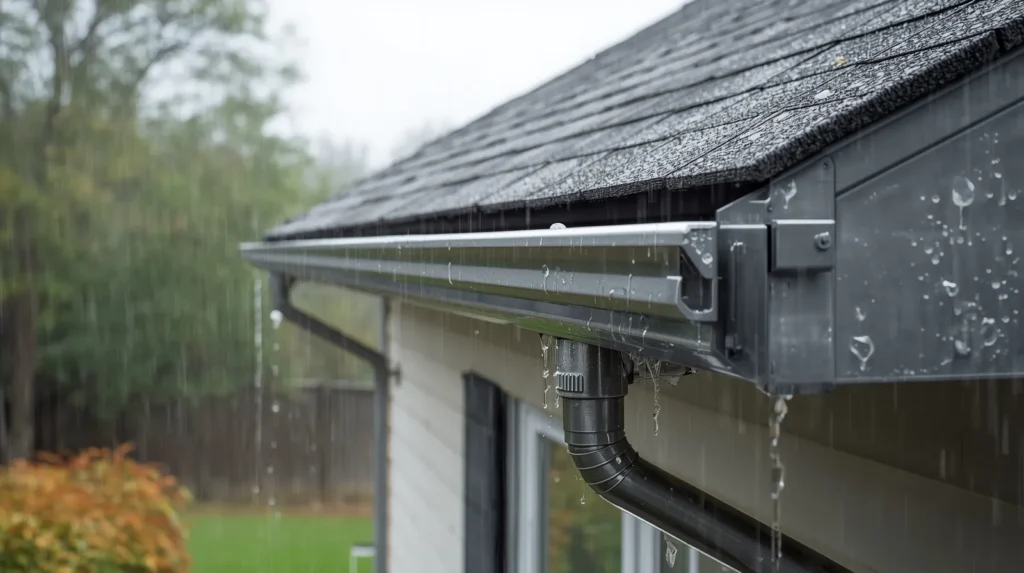
Gutter pitch is the slight angle built into the gutter to guide the water to the downspout. Think of it like a gentle slide. The angle is small, so the gutter does not look crooked, but it is important enough to control the whole drainage system.
Pitch affects how fast the water runs through the gutter. If the pitch is too low, water moves slowly and collects inside the channel. If the pitch is too high, the gutter may look uneven and drain too fast, which can cause splashing.
A smooth pitch creates balance. It keeps leaves moving, reduces standing water, and helps the system work even during a heavy rain. When professionals install gutters, they make sure the pitch is correct from the start so you get the smoothest flow possible.
The Right Gutter Pitch and Why It Protects Your Home
The right gutter pitch protects your home by keeping rainwater away from the roofline, siding, and foundation. When the slope is correct, rainfall moves in a straight, controlled path into the downspout. This prevents water from collecting inside the gutter, which can push outward and cause leaks along the edges.
A correct pitch also keeps the gutter from bending or sagging. Standing water is heavy. When it sits in the gutter for a long time, it pushes downward and slowly pulls the gutter away from the house. When the pitch is right, water never stays long enough to add weight.
Your home stays safer because the gutter can send water where it belongs. It never sits, pools, or flows backward. This prevents mold, soil erosion, wood rot, and damage near windows or doors. The right pitch keeps your drainage system strong and keeps water from hurting any part of your home.
How Much Slope for Rain Gutters Is Considered Proper
The proper slope is usually one quarter inch of drop for every ten feet of gutter. This small drop is enough to guide the water to the downspout without making the gutter look like it leans.
This measurement comes from years of field experience. Experts have tested many angles, and this small slope offers the best balance between water flow and visual appeal. It gives your gutter a smooth path for water while staying straight to the eye.
The slope can be adjusted depending on the roof size or the amount of rainfall in your area. Bigger roofs make more water. Heavy rains need stronger flow. A trained installer can make small adjustments to match your home’s needs.
Gutter Slope Per Foot, The Measurement Professionals Actually Use
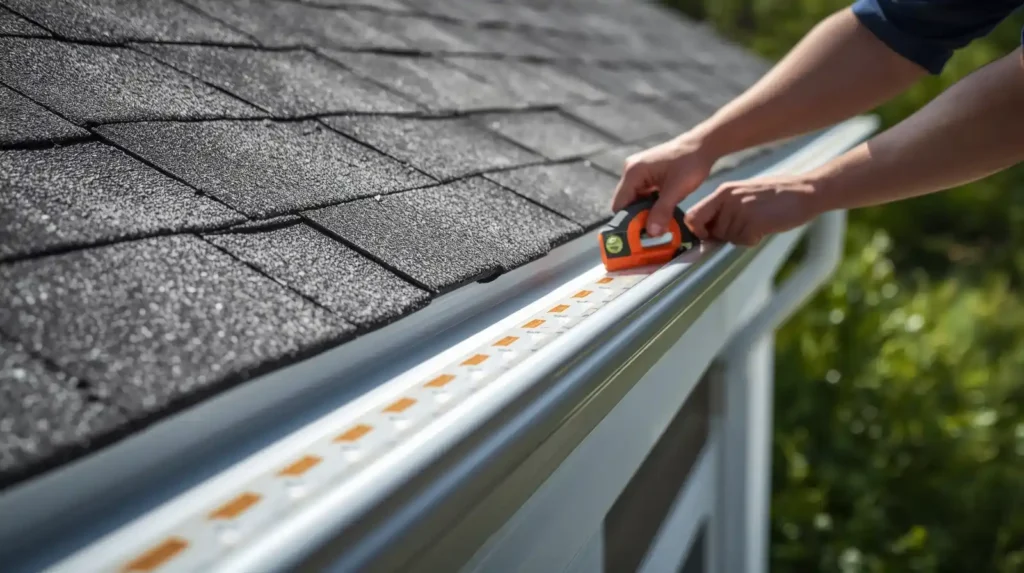
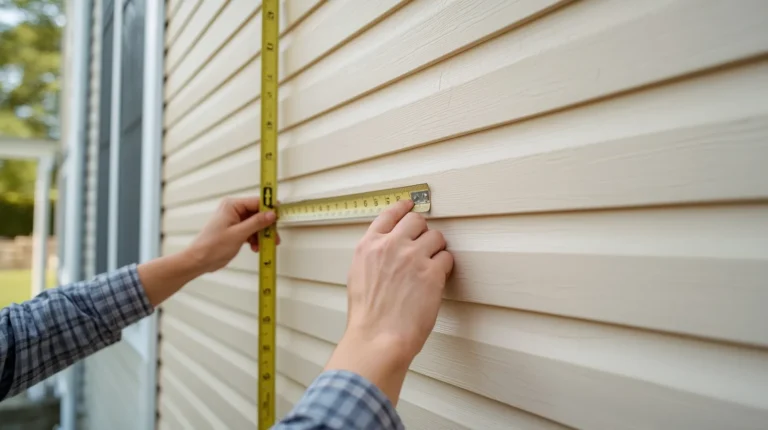
Professionals measure gutter slope per foot to keep the pitch consistent. Instead of guessing, they use a level or a measuring tool along the gutter line. The slope per foot should be steady from one end to the other.
This small per foot measurement helps the installer avoid dips or high spots that can slow the flow. Even a tiny bump in the gutter can trap leaves or slow water. The goal is to create a smooth and even line from the start to the downspout.
The slope per foot also ensures the gutter does not hold water after a storm. When a gutter drains cleanly with no leftover puddles, it means the pitch is correct and the slope is performing the way it should.
Gutter Angle and Rain Gutter Angle, Why Small Changes Make a Big Difference
The gutter angle is the slight tilt that keeps water moving inside the channel. A very small change in this angle can change how the gutter performs. A tiny tilt in the wrong direction can hold water. A tiny tilt in the right direction can improve flow and prevent clogging.
The rain gutter angle must stay gentle and steady. A very steep angle can cause noise, splashing, and uneven flow. A very flat angle makes water stop moving. A balanced angle keeps the water inside the gutter, moves the rain without spills, and protects the siding and foundation.
When installers set the angle, they check it many times because the whole system depends on it. Even one inch out of place can change the performance.
Does Guttering Need to Slope in Every Installation
Yes, gutters always need a slope. It might be very small, but it must be there. Without slope, water sits inside the gutter and does not reach the downspout. This still water can freeze in winter, create leaks, or pull the gutter off the house.
Even homes with short gutter runs still need slope. Even small roofs need slope. The size of the house does not change the need for proper drainage. Water always needs a clear path, and slope is the only way to create it.
Some homeowners assume gutters should sit perfectly level. In reality, they should look level from the ground, but the installer builds a hidden slope into the system to help water move. Every installation includes a slope, even if you cannot see it.
Guttering Slope Angle Problems That Lead to Overflow and Water Damage
Many gutter issues come from slope problems. These can include:
- Water overflowing during storms
- Water standing inside the gutter
- Soil erosion under the roof edge
- Leaks behind the gutter
- Mold on siding
- Stains on the exterior walls
- Rot near the fascia
These problems happen when the guttering slope angle is not set correctly. A slope that is too flat slows the water. A slope that is wrong in direction sends water away from the downspout. A slope that changes in the middle creates small dips that trap water and debris.
These mistakes can also lead to fast clogs. Leaves and small twigs often catch in low spots. A steady slope prevents that by moving everything straight to the downspout.
How Professionals Adjust Gutter Pitch for Long Term Performance

Professionals use special tools to adjust gutter pitch. They start by measuring the high point and low point. They check the gutter hangers, the roofline, and the downspout position. They remove any sections that dip or sag. Then they lift the gutter to the correct angle and secure it.
Adjusting gutter pitch takes skill because every small movement affects the rest of the run. A trained installer knows how to make changes without bending or damaging the gutter.
When the adjustment is finished, water should move cleanly across the channel. There should be no puddles. No slow spots. No reverse flow. This level of care is why trusted companies like Port Solutions DMV get the slope right the first time and keep your system reliable for many years.
Trusted Gutter Slope Solutions for Homes in Stafford, VA by Port Solutions DMV
When homeowners in Stafford, VA want reliable gutter slope solutions, they look for a team that understands correct pitch, smooth flow, and long term protection. Port Solutions DMV offers the level of skill needed to install and adjust gutters with care. Their team checks the gutter line, measures the pitch correctly, and makes sure the water flows exactly where it should.
Professionals look at the roof shape, the downspout layout, and the size of the gutter. They set the slope so water moves away from your home without fail. Their process keeps your foundation, siding, and roof safe from water damage.
A correct gutter slope is not something to guess. It should be measured, adjusted, and tested by someone who knows the work. Port Solutions DMV offers that peace of mind.
If you want your gutters to work better and protect your home for years, reach out today. A simple inspection can help you see how well your slope performs and what improvements can help you avoid costly damage. You can get a quick visit, clear pricing, and friendly help from a local team that cares.